
Introduction
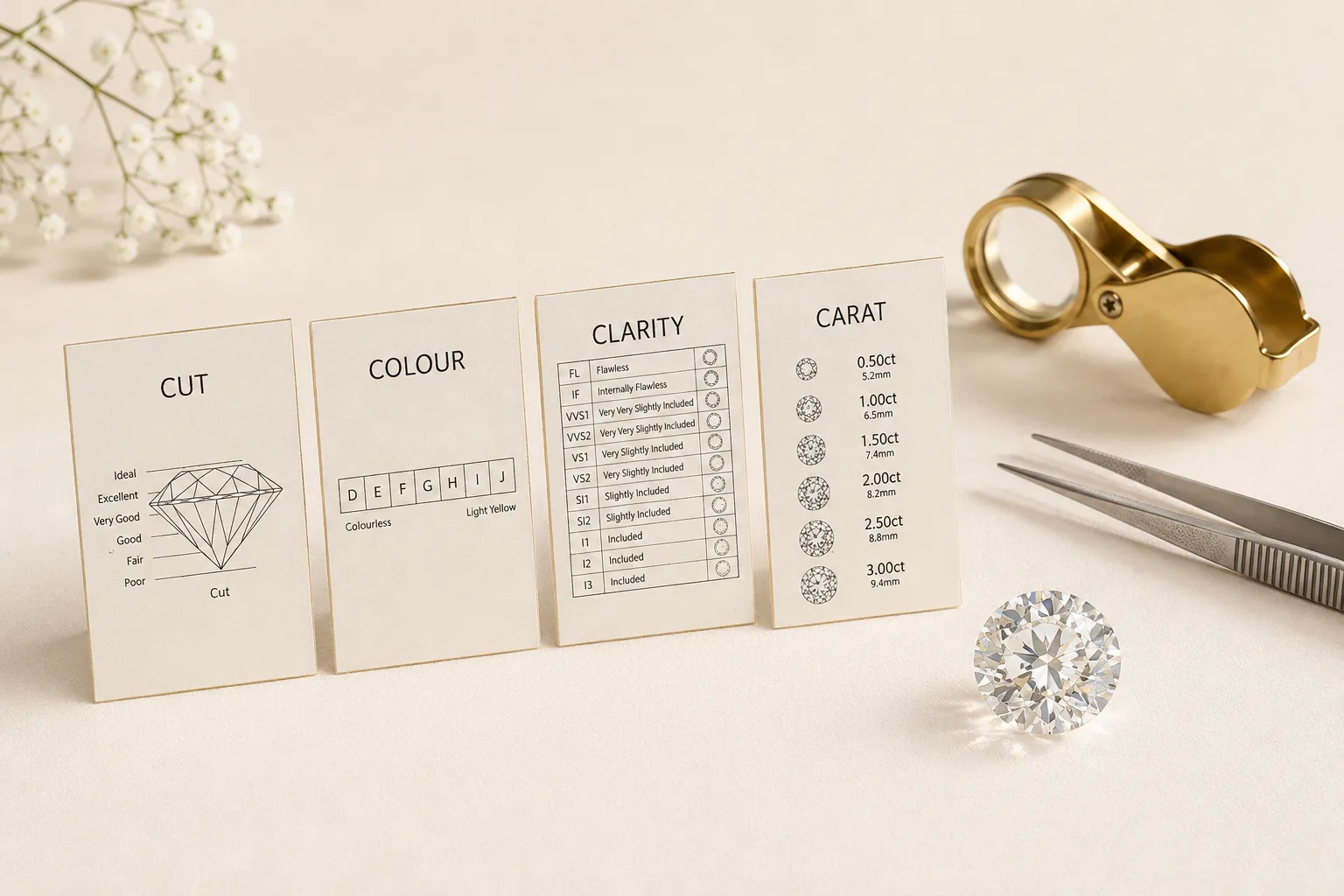
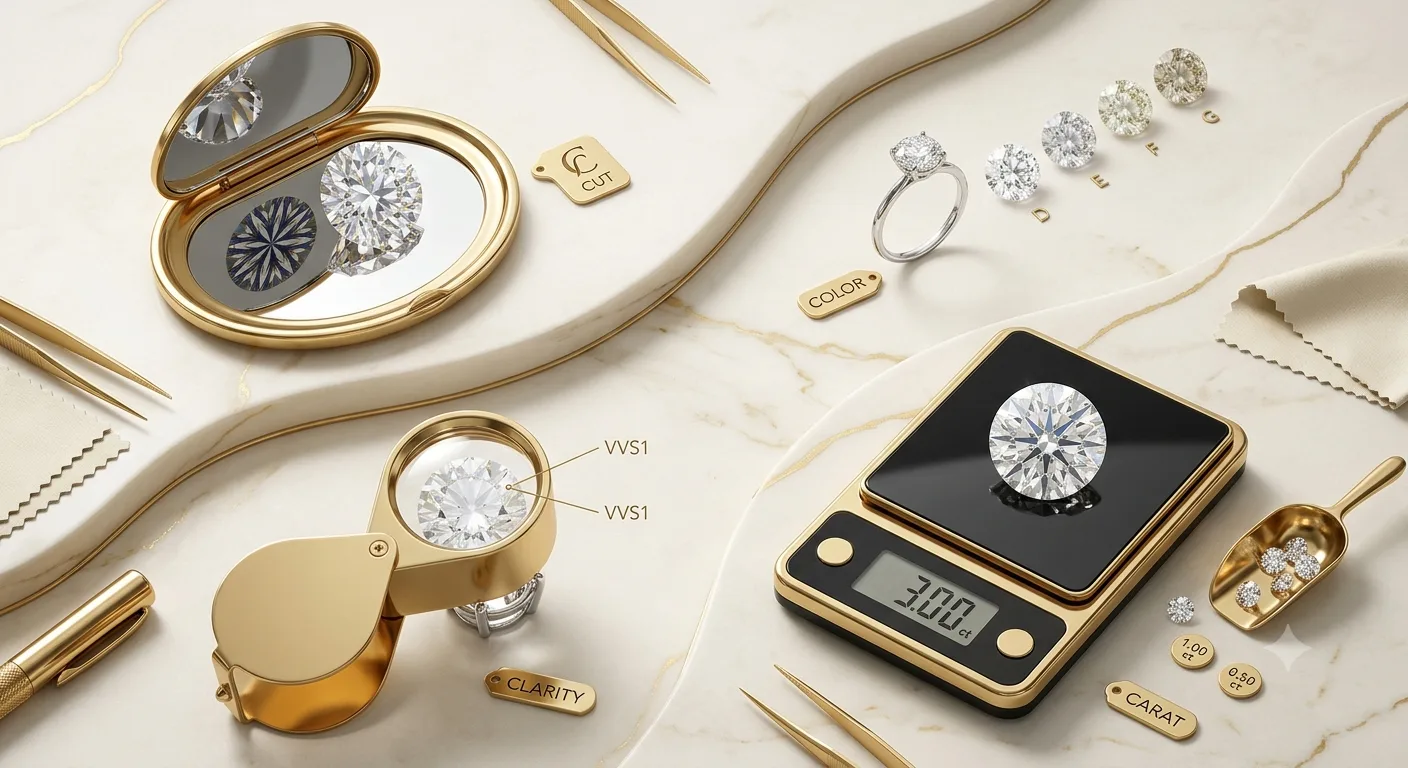
Choosing a diamond can feel complicated when you are unfamiliar with the factors that determine its quality and appearance. The 4Cs of a diamond provide a simple framework for understanding its most important characteristics: Cut, Colour, Clarity, and Carat.
These four factors work together to influence how a diamond looks, how much brilliance it produces, and how its quality is evaluated. However, the highest grade in every category does not automatically mean that a diamond is the best choice. Personal style, jewellery design, budget, and visual preference all matter.
Understanding the 4Cs of diamonds can therefore help you compare them more confidently, rather than choosing only by appearance or price.
1. Cut: The Key to Diamond Brilliance
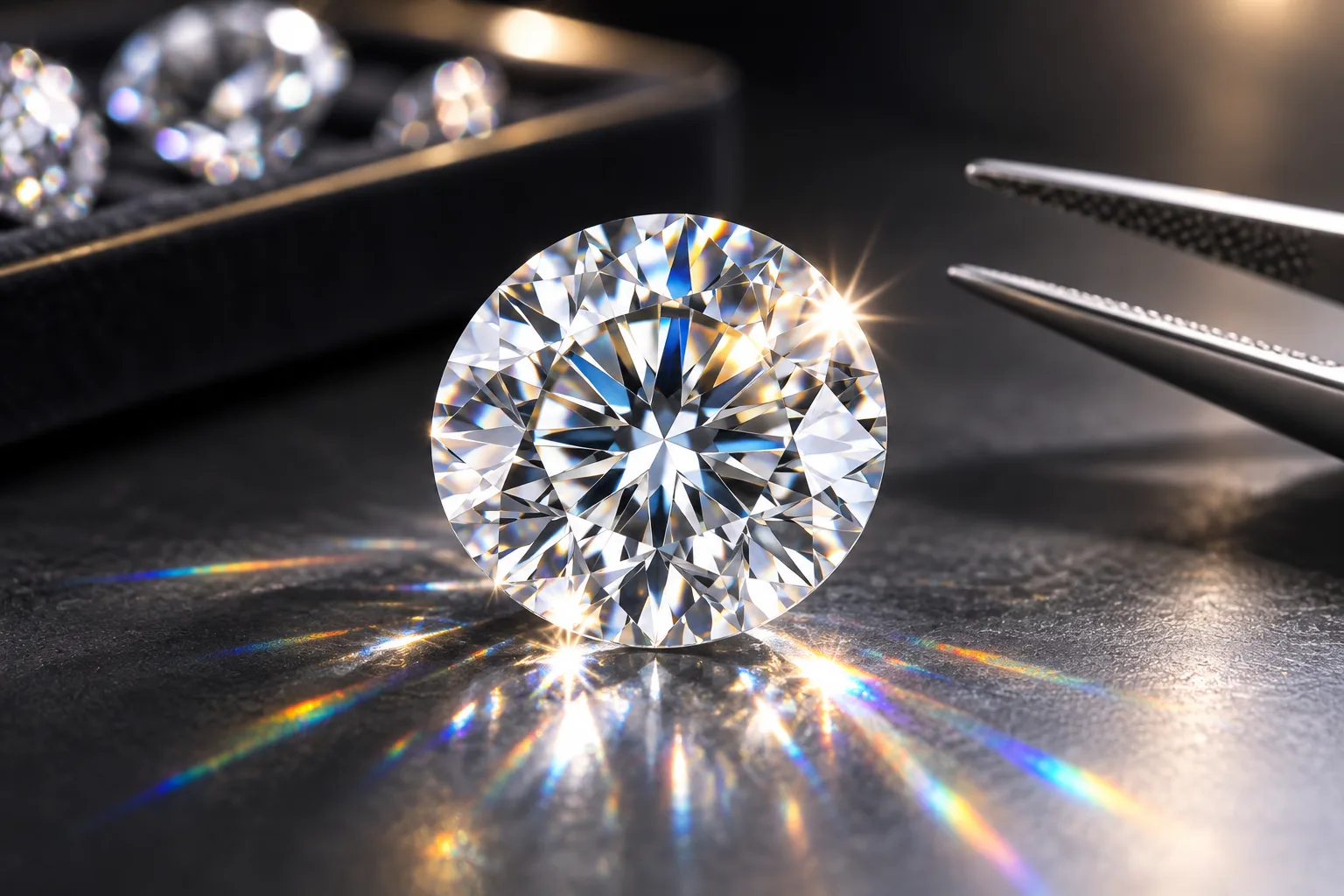
Cut is one of the most important elements in the diamond 4Cs because it affects how effectively a diamond interacts with light. It is often misunderstood as the shape of a diamond, but cut actually refers to how precisely the diamond has been proportioned, polished, and finished.
A well-cut diamond can reflect light through its facets and return it towards the viewer, creating noticeable brilliance and sparkle. A poorly cut stone may appear less lively even when it has a high colour or clarity grade.
Diamond cut is commonly evaluated using grades such as:
- Excellent
- Very Good
- Good
- Fair
- Poor
For many buyers, a well-balanced cut can provide an attractive combination of sparkle and value. The ideal choice depends on the diamond shape and the visual appearance you prefer.
When comparing stones, look beyond the grade alone. Examine the diamond under suitable lighting and consider whether it appears bright, lively, and well-proportioned.
2. Colour: Understanding Diamond Whiteness
Colour describes how much visible body colour a diamond contains. In traditional grading systems, diamonds are generally assessed on a scale that begins with D, representing the highest colourless range, and continues through progressively warmer grades.
Colour differences can sometimes be subtle, particularly when diamonds are viewed individually. However, the setting and metal colour can influence how noticeable warmth appears.
A colourless diamond can create a bright, crisp appearance, while diamonds with slightly warmer tones may offer a softer visual character. Neither is automatically better for everyone.
When selecting colour, consider:
- The diamond’s shape
- The metal used in the jewellery
- Personal preference
- Budget
- How the diamond looks to the eye
For example, some diamond shapes may reveal colour more easily than others. A suitable setting can also complement a slightly warmer stone beautifully.
The goal is not simply to choose the highest colour grade. Instead, select a grade that provides the appearance you want while keeping the overall jewellery choice practical.
3. Clarity: Natural Characteristics Inside a Diamond
Clarity evaluates the presence of internal characteristics, known as inclusions, and external characteristics, known as blemishes. These characteristics can develop naturally during diamond formation.
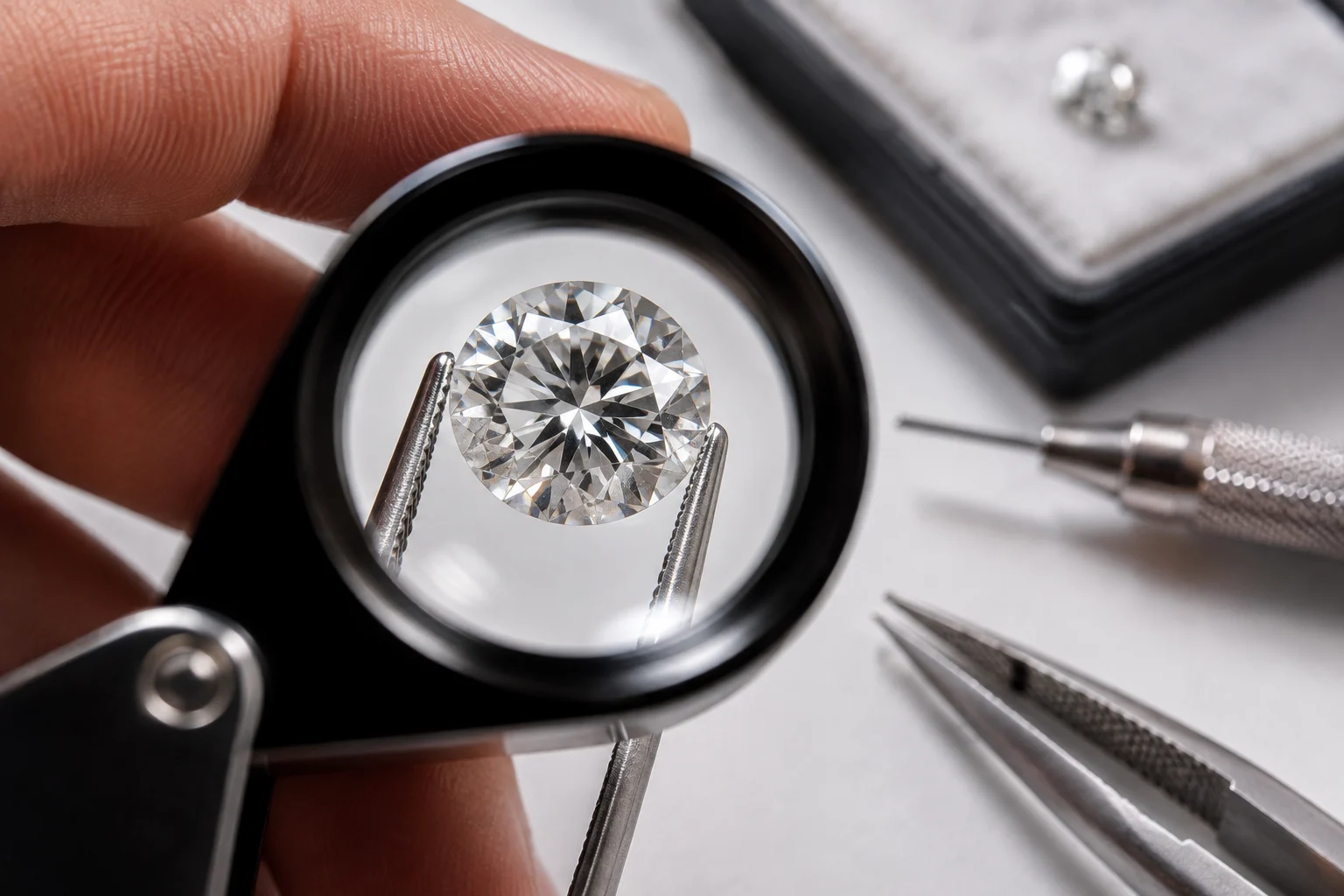
Clarity grades help describe how visible these characteristics are under magnification. Higher clarity grades generally contain fewer or less noticeable characteristics.
Common clarity categories include:
- Flawless (FL)
- Internally Flawless (IF)
- Very, Very Slightly Included (VVS)
- Very Slightly Included (VS)
- Slightly Included (SI)
- Included (I)
A diamond can look exceptionally beautiful even without having the highest clarity grade. Some characteristics may be difficult to notice without magnification, especially when they are small and positioned away from prominent areas.
For this reason, examining the stone’s actual appearance is important. A well-selected diamond with good overall visual appeal can offer excellent value without requiring the highest clarity classification.
4. Carat: Understanding Diamond Weight
Carat measures a diamond’s weight rather than simply indicating how large the stone appears. One carat is divided into 100 points, allowing diamonds to be measured with precision.
A larger carat weight does not automatically indicate better quality. Two diamonds with the same carat weight can look different because their cut, proportions, shape and clarity may vary.
Carat should therefore be considered alongside the other elements of the diamond 4Cs rather than treated as the single measure of quality.
When choosing carat weight, think about:
- The jewellery design
- Finger or wearing proportions
- Desired visual presence
- Overall budget
- Cut quality
- Diamond shape
A well-proportioned diamond can sometimes appear more impressive than a heavier stone with less effective proportions. The right balance can make the jewellery feel elegant without appearing unnecessarily large.
How the 4Cs Work Together
The four characteristics should be considered as a complete picture rather than separate scores. Improving one factor may significantly affect the price, while a different combination could yield a similar visual result within a more comfortable budget.
For example, you might choose a diamond with excellent cut quality and slightly lower clarity instead of paying considerably more for a higher clarity grade that is difficult to distinguish visually.
A practical approach is to decide what matters most to you first. If sparkle is your priority, pay particular attention to cut. If size is important, explore carat weight while maintaining a suitable cut. If you prefer a very crisp appearance, colour may receive more attention.
This balanced approach makes the diamond 4Cs easier to understand and apply when comparing jewellery options.
How to Use the Diamond 4Cs When Choosing Jewellery
Before making a jewellery decision, compare diamonds based on their overall appearance rather than focusing on a single specification.
A useful approach is to:
- Decide your preferred jewellery style and diamond shape.
- Set a realistic budget before comparing grades.
- Prioritise cut when brilliance and sparkle are important.
- Compare colour grades visually instead of relying only on letters.
- Check clarity characteristics and their visibility.
- Compare carat weight with the diamond’s proportions and appearance.
- Review the diamond’s grading information where available.
- Consider how the complete stone looks in its intended jewellery setting.
The most suitable combination will depend on your priorities. A diamond that looks beautiful to you and fits your budget can be a better choice than one selected simply because it has the highest grades.
Frequently Asked Questions About Diamond 4Cs
1. What are the Diamond 4Cs?
The Diamond 4Cs represent four essential aspects of a diamond: Cut, Colour, Clarity and Carat. They are used to describe important characteristics that influence a diamond’s appearance, quality assessment, and value.
2. Which Diamond 4Cs Should You Prioritise?
No single element can be considered the most important in every situation. Cut has a major influence on brilliance, but colour, clarity and carat also contribute to the overall appearance and value of the stone.
3. Does higher carat mean a better diamond?
No. Carat measures diamond weight, not overall quality. A heavier diamond can have lower cut, colour, or clarity characteristics than a lighter diamond.
4. Is higher clarity always better?
Higher clarity means fewer visible characteristics under grading conditions, but the highest clarity grade may not always be necessary for an attractive-looking diamond. Visual appearance and value should also be considered.
5. Why is cut important in the Diamond 4Cs?
Cut influences how a diamond handles and reflects light. A well-cut stone can produce strong brilliance and sparkle, making cut an important part of the diamond 4Cs.
Final Thoughts
Understanding the diamond 4Cs makes diamond selection much easier because it gives you a structured way to compare different stones. Cut influences brilliance, colour describes the degree of visible warmth, clarity evaluates natural characteristics, and carat represents weight.
Instead of searching for the highest grade in every category, focus on finding the right balance for your jewellery style, appearance preferences, and budget. When these four characteristics are considered together, you can make a more informed and confident diamond jewellery decision. If you want to explore diamond jewellery styles and buying considerations in more detail, read our Diamond Jewellery Guide. For those choosing a ring for a proposal or special commitment, our Engagement Ring Guide can also help you understand important design and selection factors.