
Introduction
A bridal jewellery is more than an accessory. It brings together the wedding outfit, hairstyle, makeup, and overall personal style to create a memorable look. From traditional gold ornaments to elegant diamond designs and contemporary pieces, there are many ways to create jewellery combinations for different wedding ceremonies.
Choosing the right Bridal Jewellery requires more than selecting attractive designs. The neckline of the outfit, embroidery, colour, face shape, comfort, jewellery quality, and type of ceremony can all influence the final choice. A carefully planned collection can make each bridal outfit look polished without appearing overly crowded.
Whether you prefer a traditional wedding style or a modern aesthetic, understanding how different jewellery pieces work together can help you create a confident, balanced bridal look.
How to Choose Bridal Jewellery for Your Wedding Outfit
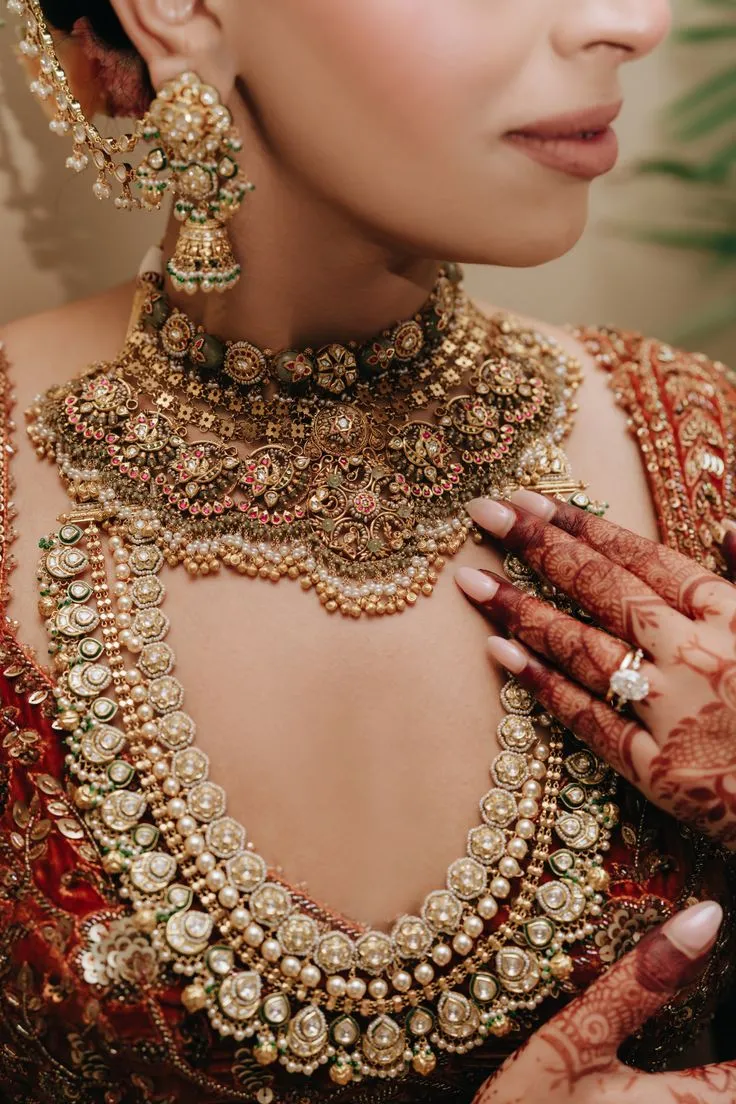
The wedding outfit should be one of the first things you consider when selecting jewellery. A heavily embroidered lehenga may already have plenty of visual detail, so jewellery with a balanced design can prevent the overall appearance from becoming too busy.
Pay attention to the neckline as well. A deep or open neckline can work beautifully with layered necklaces, while a higher neckline may look better with a shorter necklace or statement earrings.
The colour of the outfit is another important factor. Traditional yellow gold can complement rich red, maroon, green, and other classic bridal colours. White gold or diamond jewellery may work particularly well with pastel, ivory, silver, or contemporary outfits.
Before finalising your jewellery, consider:
- The neckline and design of the wedding outfit.
- The colour and embroidery of the fabric.
- The size and proportion of each piece of jewellery.
- The ceremony and type of event.
- Your personal style and comfort.
- Whether the complete combination looks balanced.
The goal is not to wear as many ornaments as possible. Instead, every piece should contribute to the overall appearance.
Essential Pieces of Bridal Jewellery
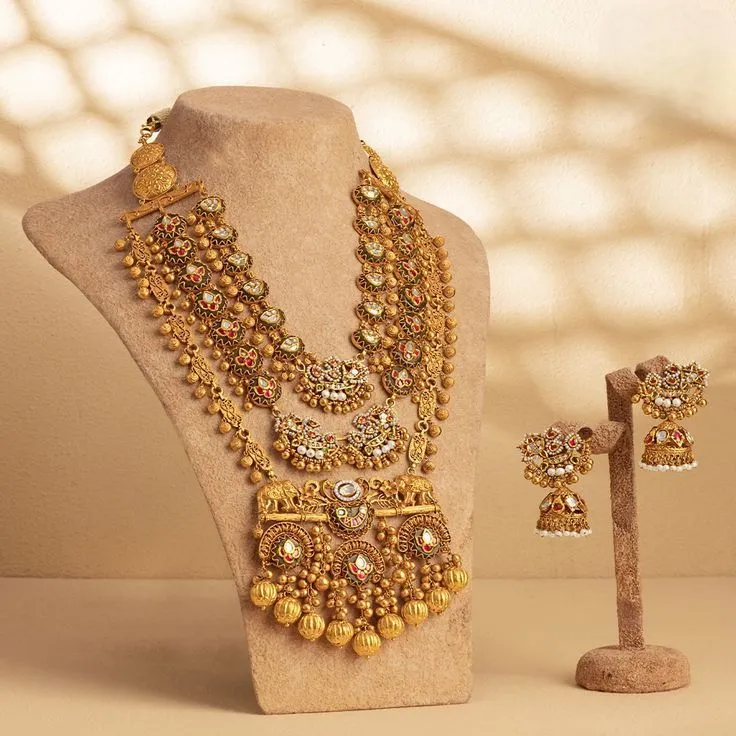
A bridal jewellery collection can include several ornaments, but not every bride needs to wear every piece. The best combination depends on the wedding outfit, ceremony, and individual preference.
Necklace
The necklace is often the centrepiece of a bridal look. Chokers, layered necklaces, long harams, pendant necklaces, and traditional gold designs can create very different appearances.
When choosing a necklace, consider the neckline and embroidery around the chest area. A heavily detailed necklace may work well with a relatively simple neckline, while a simpler necklace can complement an elaborately decorated outfit.
Earrings
Earrings frame the face and can have a major effect on the overall look. Jhumkas, chandbalis, studs, and long drop earrings are popular choices.
The earrings should also complement the necklace. Wearing an extremely large necklace with equally oversized earrings can sometimes make the face appear visually crowded.
Bangles and Bracelets
Bangles bring traditional character to a wedding outfit and can add movement and colour to the hands. Gold bangles are timeless, while bracelets can provide a more contemporary finish.
For a balanced appearance, consider the embroidery and colours of the outfit before deciding how many bangles to wear.
Maang Tikka
A maang tikka connects the hairstyle with the rest of the jewellery and adds a distinctive traditional element. Choose its size according to your hairstyle, face proportions, and other jewellery.
Rings and Additional Accessories
Rings, hathphool, anklets, waist belts, and nose rings can be added according to personal preference. These accessories can enhance the bridal look, but they should complement the main jewellery rather than compete with it.
Gold, Diamond or Contemporary Designs?
The choice of jewellery material depends on personal taste, wedding traditions, outfit style, and budget.
Gold remains a timeless option for Indian weddings because of its classic appearance and versatility. Different gold colours, including yellow, white, and rose gold, can create different visual effects.
Diamond jewellery offers a refined and sophisticated appearance and can be especially suitable for receptions, engagement ceremonies, or modern wedding outfits. Contemporary jewellery can also combine traditional inspiration with lightweight designs and cleaner shapes.
When comparing different pieces, look beyond appearance. Consider:
- Metal purity and quality.
- Craftsmanship and finishing.
- Gemstone quality where applicable.
- Weight and wearing comfort.
- Durability and maintenance requirements.
- How well the design works with your existing jewellery.
Understanding these factors can help you select pieces that are attractive as well as practical.
Match Jewellery With Your Face Shape
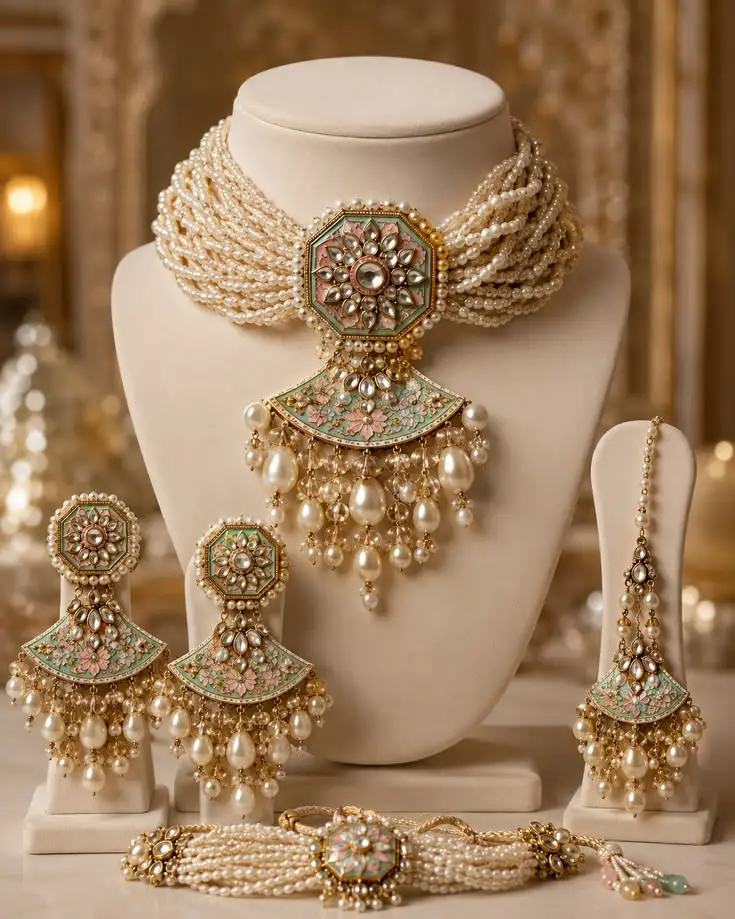
Face shape can be useful when deciding which jewellery proportions may look most flattering. Use these face-shape guidelines as a starting point, then choose jewellery that feels naturally suited to your features and personal style.
For rounder faces, longer earrings and elongated necklace designs can create a visually lengthened effect. Brides with longer face shapes may prefer wider earrings or shorter necklace styles to introduce more balance.
An oval face offers plenty of flexibility when choosing jewellery, while curved and rounded designs can beautifully soften the appearance of sharper facial features.
The most important consideration is confidence. Jewellery should reflect your personality rather than forcing you to follow a particular styling rule.
Comfort Matters on Your Wedding Day
Wedding ceremonies can last for several hours, and brides may need to wear their jewellery during rituals, photographs, travel, and celebrations. A beautiful design is important, but choosing jewellery that feels comfortable throughout the celebrations is equally worthwhile.
Before the wedding, try wearing important pieces for an extended period. Check whether the earrings feel too heavy, whether the necklace sits comfortably, and whether the bangles allow you to move your hands freely.
If you expect to wear your jewellery for several hours, lighter designs can help you stay comfortable while maintaining an elegant bridal look. Comfortable jewellery allows you to enjoy your wedding celebrations without constantly adjusting your accessories.
Smart Tips for Planning Your Wedding Jewellery
Planning your jewellery collection early can make wedding preparation much easier. Instead of choosing pieces randomly, create a jewellery plan based on each ceremony and outfit.
Keep these practical tips in mind:
- Match jewellery with each wedding outfit before the event.
- Avoid using too many statement pieces in one look.
- Try the complete outfit, jewellery, hairstyle, and makeup together.
- Check the weight of heavier necklaces and earrings beforehand.
- Keep jewellery safely stored between ceremonies.
- Photograph the complete look before finalising your selection.
A complete trial can help you identify problems with proportions, colours, comfort, or styling before the wedding day.
Jewellery Care Before and After the Wedding
Wedding jewellery should be handled carefully to preserve its appearance. Perfume, hairspray, cosmetics, moisture, and harsh chemicals can affect certain metals and gemstones.
After wearing each piece, gently wipe it with a suitable soft jewellery cloth. Avoid placing multiple ornaments together because chains can become tangled and surfaces may become scratched.
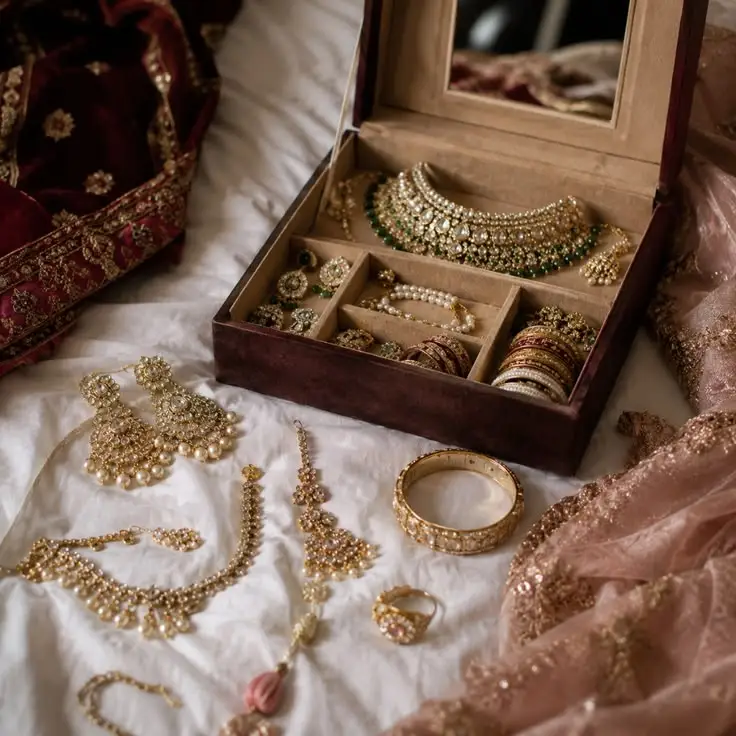
Store necklaces, earrings, bangles, and rings separately whenever possible. Soft pouches or individual compartments can provide additional protection.
For valuable pieces, professional inspection and cleaning can also be considered periodically. Checking clasps, hooks, settings, and gemstones may help identify minor problems before they become more serious.
Final Thoughts
Choosing the right Bridal Jewellery is about finding a balance between tradition, personal style, outfit design, quality, and comfort. Instead of selecting every ornament simply because it looks attractive, consider how each piece contributes to the complete bridal appearance.
Whether you prefer classic gold, elegant diamond designs, or a combination of traditional and contemporary styles, thoughtful planning can make your wedding jewellery look refined and memorable. If you are considering gold pieces for your wedding, explore our Gold Jewellery Guide for helpful information about gold purity, designs, buying considerations, and care. You can also read our [Jewellery for Different Face Shapes] guide to understand how different necklace and earring styles can complement your facial features.
Above all, select jewellery that feels effortless to wear and reflects your personal style. The right pieces should complement your bridal appearance while letting you move freely and enjoy every moment of your wedding celebrations.
Frequently Asked Questions About Bridal Jewellery
1. How do I choose Bridal Jewellery for my wedding outfit?
Consider the outfit’s neckline, colour, embroidery, ceremony, and overall design. Jewellery should complement the outfit and create balance rather than making the look feel overcrowded.
2. How much jewellery should a bride wear?
There is no fixed amount. A necklace, earrings, bangles, and one or two additional accessories can create a complete look. The ideal combination depends on the outfit and personal style.
3. Which jewellery is best for an Indian wedding?
Traditional gold jewellery remains a timeless choice, while diamond and contemporary designs can work beautifully for modern wedding and reception looks. The best option depends on the bride’s preference, outfit, ceremony, and budget.
4. How can I keep wedding jewellery safe after the wedding?
Store each piece separately in a soft pouch or individual compartment. Keep jewellery away from perfumes, moisture, cosmetics, and harsh chemicals, and clean it appropriately after use.
5. Should wedding jewellery be comfortable?
Yes. Wedding ceremonies can last several hours, so comfortable jewellery is important. Try important pieces before the wedding to check their weight, fit, and ease of movement.