
Introduction
BIS Hallmark is one of the most important things to check when buying gold jewellery. A beautiful design may attract attention, but the actual value of a piece of gold jewellery depends largely on its purity and weight. This is why understanding the BIS hallmark is essential before making a purchase.
A BIS hallmark provides third-party assurance about the purity or fineness of precious metal jewellery. In India, the Bureau of Indian Standards (BIS) operates the hallmarking system for gold and silver articles. The purpose is to help consumers make more informed purchasing decisions and reduce the risk of receiving jewellery with a purity lower than advertised.
If you are planning to buy a gold ring, chain, bracelet, necklace, or another jewellery piece, understanding the BIS hallmark can help you read the markings correctly and verify the jewellery before completing your purchase.
What Is a BIS Hallmark?
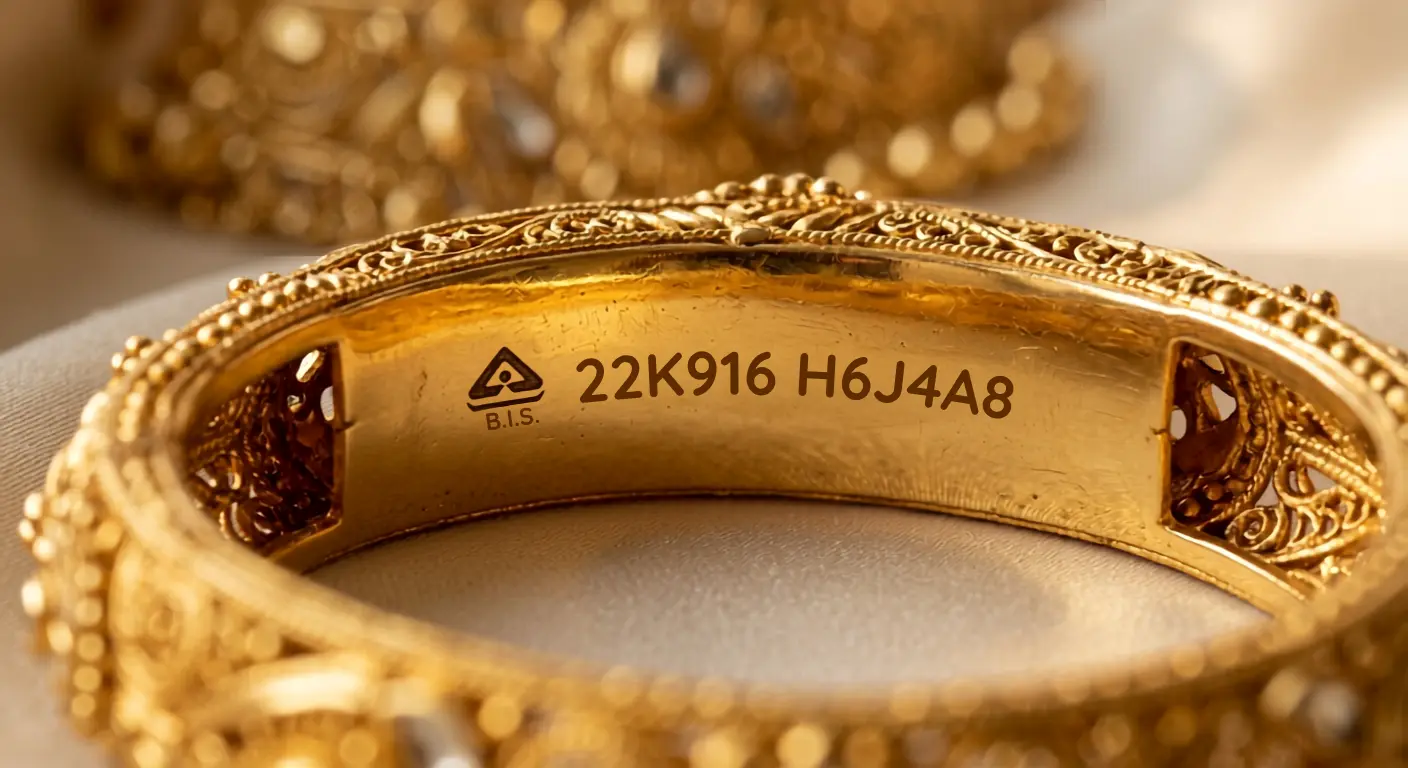
A BIS hallmark is an official mark associated with the verified purity of a precious-metal article. For gold jewellery covered under the current hallmarking system, the hallmark includes three important components: the BIS Standard Mark, the purity mark showing caratage and fineness, and a six-digit alphanumeric Hallmark Unique Identification (HUID) number.
These markings are particularly useful because they give buyers more information than simply relying on a jeweller’s verbal statement about gold quality.
For example, you may see a purity marking such as 22K916. The “22K” indicates 22-karat gold, while “916” represents a fineness of 916 parts per thousand.
A hallmark should therefore be treated as an important part of your gold-buying checklist rather than just a small engraving on the jewellery.
The Benefits of Checking BIS Hallmark on Gold Jewellery
Gold is valuable, so even a small difference in purity can affect the value of a jewellery purchase. The purpose of hallmarking is to provide consumers with greater confidence that the precious-metal content corresponds with the marked purity.
Some important benefits of buying hallmarked jewellery include:
- Greater confidence in the declared purity
- Third-party assurance of precious-metal quality
- Easier verification through the HUID system
- Better transparency when purchasing gold jewellery
- Additional protection if a purity-related discrepancy is discovered
According to BIS, consumers can also have hallmarked or unhallmarked jewellery tested at a BIS-recognized Assaying and Hallmarking Centre. BIS states that where hallmarked jewellery is found to have lower purity than marked, compensation provisions apply under the applicable rules.
For buyers, this makes understanding BIS hallmark markings an important part of responsible jewellery shopping.
Understanding Gold Purity Marks
One of the easiest ways to understand a BIS hallmark is to learn the relationship between karat and fineness.
Gold purity is commonly expressed in karats, while fineness expresses the proportion of pure gold in parts per thousand.
Some gold grades permitted for hallmarking under the relevant Indian Standard include:
- 14K – 585 fineness
- 18K – 750 fineness
- 20K – 833 fineness
- 22K – 916 fineness
- 23K – 958 fineness
- 24KS – 995 fineness
These grades are listed by BIS under IS 1417 for gold jewellery and artefacts.
This means that a higher karat generally represents a higher proportion of gold, although the best choice depends on the jewellery design, durability requirements and intended use.
For everyday jewellery, consumers should not judge quality only by the appearance or colour of gold. Checking the purity marking and BIS hallmark provides much more useful information.

What Is HUID in BIS Hallmark Jewellery?
HUID stands for Hallmark Unique Identification. It is a six-digit alphanumeric identification number assigned to an individual hallmarked jewellery item.
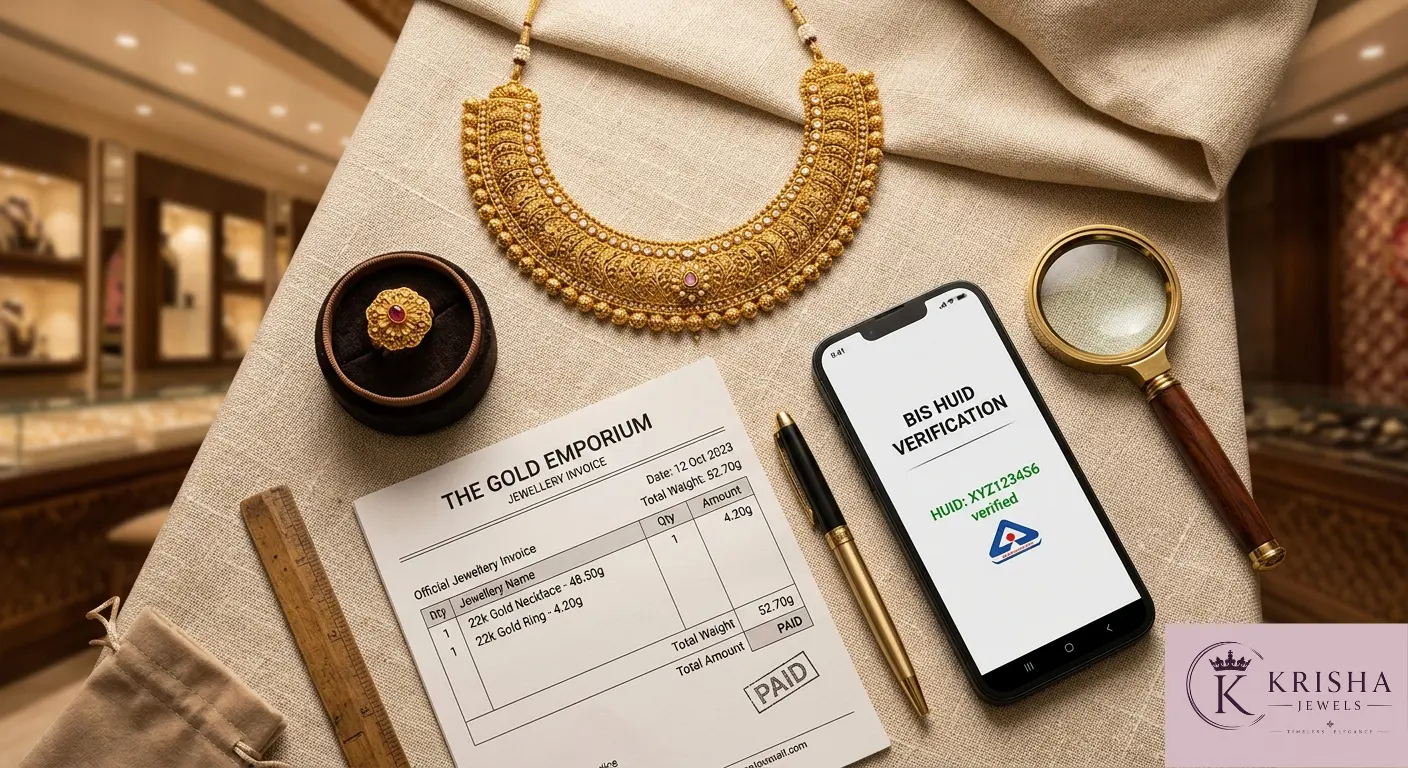
Since the introduction of HUID-based hallmarking, the HUID has become an important part of the hallmark on gold jewellery. BIS explains that the HUID is unique to each hallmarked item and is traceable. Consumers can use the BIS CARE App’s Verify HUID feature to check hallmarked jewellery.
This is one of the most useful developments for consumers because buyers no longer have to depend only on visually examining a small hallmark engraving.
How to Verify HUID Before Buying
Before purchasing a gold jewellery item, you can follow these simple steps:
- Locate the HUID number on the jewellery.
- Open the official BIS CARE App.
- Use the Verify HUID feature.
- Enter or check the HUID details as provided by the app.
- Compare the displayed information with the jewellery you are considering.
The BIS CARE App specifically provides a facility for consumers to verify hallmarked jewellery using its HUID number.
If the details do not appear consistent, ask the jeweller for clarification before completing your purchase.
How to Check a BIS Hallmark on Gold Jewellery
A small jewellery piece can contain several markings, so it is useful to know what you are looking for.
When checking a BIS hallmark, look for these three main elements:
1. BIS Standard Mark
The BIS logo identifies the article as carrying the applicable BIS hallmark.
2. Purity and Fineness Mark
This tells you the declared gold purity. Examples include markings associated with 18K750 or 22K916.
3. Six-Digit HUID
The HUID is the unique alphanumeric identification number associated with the hallmarked item.
BIS confirms that these three marks form the hallmark on hallmarked gold jewellery under the HUID system.
BIS Hallmark vs Carat: What Is the Difference?
A common mistake is to treat “karat” and “hallmark” as the same thing.
Although karat and hallmark are connected to gold quality, they serve two different purposes.
Karat indicates how much pure gold is present in a jewellery alloy. For example, 22K gold contains a high proportion of gold, while the remaining material consists of other metals used to create the required properties.
A BIS hallmark, on the other hand, is part of the official hallmarking system that records and communicates the verified purity/fineness of the precious-metal article.
In simple terms:
Karat tells you the gold grade; the BIS hallmark helps provide assurance about the marked purity.
Understanding this distinction can make gold shopping much easier, especially when comparing jewellery from different designs or sellers.
What Should You Check on the Jewellery Bill?
The jewellery itself is not the only thing worth checking. Always keep the purchase invoice safely.
BIS consumer guidance states that the bill or invoice for hallmarked precious-metal articles should include relevant details such as the article description, net precious-metal weight, purity in carat and fineness, and hallmarking charges.
Before leaving the jewellery store, check that:
- The jewellery description is correct.
- The net gold weight is clearly mentioned.
- The purity and fineness are stated.
- Applicable charges are clearly shown.
- The invoice matches the jewellery purchased.
Keeping the original bill can be especially useful if you later need clarification, verification, or complaint redressal.
Is Every Gold Jewellery Item Automatically Hallmarked?
Consumers should not assume that every piece of gold jewellery has the same hallmarking status.
The mandatory hallmarking system has been expanded through different phases and amendments, and BIS maintains official information regarding the applicable mandatory hallmarking orders and covered districts.
Therefore, when buying gold, it is better to check the current BIS requirements rather than relying on old information shared online.
Also remember that hallmarking and the jeweller’s own brand or manufacturer’s mark are different things. BIS specifies the mandatory hallmark components separately from any additional jeweller or manufacturer mark.
7 Simple Tips for Buying BIS Hallmarked Gold Jewellery
If you are buying gold for a wedding, festival, anniversary, investment-related purpose or everyday wear, keep these practical points in mind:
- Look for the BIS hallmark rather than relying only on verbal purity claims.
- Check the purity and fineness marking carefully.
- Locate the HUID on the hallmarked jewellery.
- Verify the HUID using the BIS CARE App where applicable.
- Check the jewellery weight and invoice details before payment.
- Buy from a BIS-registered jeweller and look for the required registration information displayed at the store.
- Keep your original invoice and purchase documents safely after buying.
BIS consumer guidance also notes that a registered jeweller should display the BIS registration certificate and have suitable magnification available for showing hallmark details to customers.
Gold Jewellery Guides You May Also Like
Understanding hallmarking is only one part of becoming a smarter jewellery buyer. If you want to learn more about different precious metals and jewellery choices, explore these related guides:
- Gold Jewellery Guide – Learn about gold purity, karats, jewellery types and important buying considerations.
- Silver Jewellery Guide – Understand silver purity, common markings, care and buying tips.
- Diamond Jewellery Guide – Explore diamond quality factors and what to consider before choosing diamond jewellery.
These guides can help you understand the broader picture before making an important jewellery purchase.
Common Questions About BIS Hallmark
1.Is BIS hallmark proof of gold purity?
A BIS hallmark is part of India’s official hallmarking system and provides third-party assurance regarding the marked purity/fineness of precious-metal articles.
2.What is HUID in gold jewellery?
HUID is a six-digit alphanumeric Hallmark Unique Identification number associated with an individual hallmarked jewellery item. It can be verified through the BIS CARE App’s Verify HUID feature.
3.What does 916 mean on gold jewellery?
916 represents a fineness of 916 parts per thousand and is associated with 22-karat gold.
4.Should I keep the jewellery invoice?
Yes. The invoice contains important purchase information and can be useful for future reference or complaint redressal.
5.Can I verify a HUID before buying?
Yes. BIS provides a Verify HUID feature through the BIS CARE App for hallmarked jewellery items bearing a HUID number.
Final Thoughts: Check the BIS Hallmark Before You Buy
Gold jewellery is both a personal purchase and a valuable possession, so understanding what you are buying matters. A BIS hallmark provides consumers with an important layer of confidence by confirming the verified purity or fineness of the precious-metal article.
Before making your next jewellery purchase, take a few extra minutes to check the BIS Standard Mark, purity/fineness marking and HUID. Verify the HUID where applicable, review the invoice carefully and purchase from a properly registered jeweller.
Most importantly, do not judge gold jewellery only by its design, colour or price. Purity, documentation and verification are equally important.
For more practical jewellery education, continue exploring our Gold Jewellery Guide, Silver Jewellery Guide, and Diamond Jewellery Guide to make every jewellery decision with greater knowledge and confidence.